What counts as essential?
Include costs you must keep paying during a job loss or family emergency: rent, utilities, groceries, transport, insurance, minimum debt payments and core family care.
Free UAE safety savings calculator
Estimate how much emergency cash to keep for rent, bills, food, transport, family care and job uncertainty, then create a practical monthly savings plan.
Calculator
Enter essential monthly expenses and current savings. Results update instantly and stay on your device unless you choose to share them.
Target emergency fund
AED 88,200
Monthly essentials
AED 14,700
Savings shortfall
AED 68,200
Current coverage
1.4 months
Time to target
23 months
Monthly needed for 12 months
AED 5,683
Progress chart
Projection table
| Month | Projected savings | Remaining shortfall |
|---|---|---|
| 1 | AED 23,000 | AED 65,200 |
| 2 | AED 26,000 | AED 62,200 |
| 3 | AED 29,000 | AED 59,200 |
| 4 | AED 32,000 | AED 56,200 |
| 5 | AED 35,000 | AED 53,200 |
| 6 | AED 38,000 | AED 50,200 |
| 7 | AED 41,000 | AED 47,200 |
| 8 | AED 44,000 | AED 44,200 |
| 9 | AED 47,000 | AED 41,200 |
| 10 | AED 50,000 | AED 38,200 |
| 11 | AED 53,000 | AED 35,200 |
| 12 | AED 56,000 | AED 32,200 |
| 13 | AED 59,000 | AED 29,200 |
| 14 | AED 62,000 | AED 26,200 |
| 15 | AED 65,000 | AED 23,200 |
| 16 | AED 68,000 | AED 20,200 |
| 17 | AED 71,000 | AED 17,200 |
| 18 | AED 74,000 | AED 14,200 |
| 19 | AED 77,000 | AED 11,200 |
| 20 | AED 80,000 | AED 8,200 |
| 21 | AED 83,000 | AED 5,200 |
| 22 | AED 86,000 | AED 2,200 |
| 23 | AED 89,000 | AED 0 |
Example 1
A family spending AED 14,700 monthly may target 6 months of coverage, or about AED 88,200 in accessible emergency savings.
Example 2
A single professional with AED 9,000 of essential expenses and stable income may start with 3 to 4 months before expanding the fund.
Example 3
A self-employed resident may prefer 9 to 12 months because business income can be irregular and client payments may be delayed.
Formula
Target emergency fund = monthly essential expenses multiplied by recommended coverage months.
The calculator also compares your current savings with the target and estimates how many months it may take to close the shortfall at your chosen monthly saving amount.
Plan before a crisis
Include costs you must keep paying during a job loss or family emergency: rent, utilities, groceries, transport, insurance, minimum debt payments and core family care.
Three months can work for stable single-income situations. Families, variable income earners and business owners often need six to twelve months.
Keep emergency money accessible, low risk and separate from daily spending. Avoid locking the whole fund into products with penalties or delays.
Large fixed costs such as rent, school fees and car expenses can make cash flow stressful. A dedicated fund protects your budget when income pauses or unexpected bills arrive.
Do not count credit cards as emergency savings, invest the entire fund in volatile assets, or mix emergency money with holiday and shopping budgets.
Start with one month of essentials, then three months, then your full target. Reaching milestones helps make the goal less overwhelming.
Update your target after rent changes, a new child, job changes, debt payoff, or major lifestyle changes.
Once your emergency fund is stable, review savings accounts and low-risk options so idle cash stays accessible and useful.
Related guides
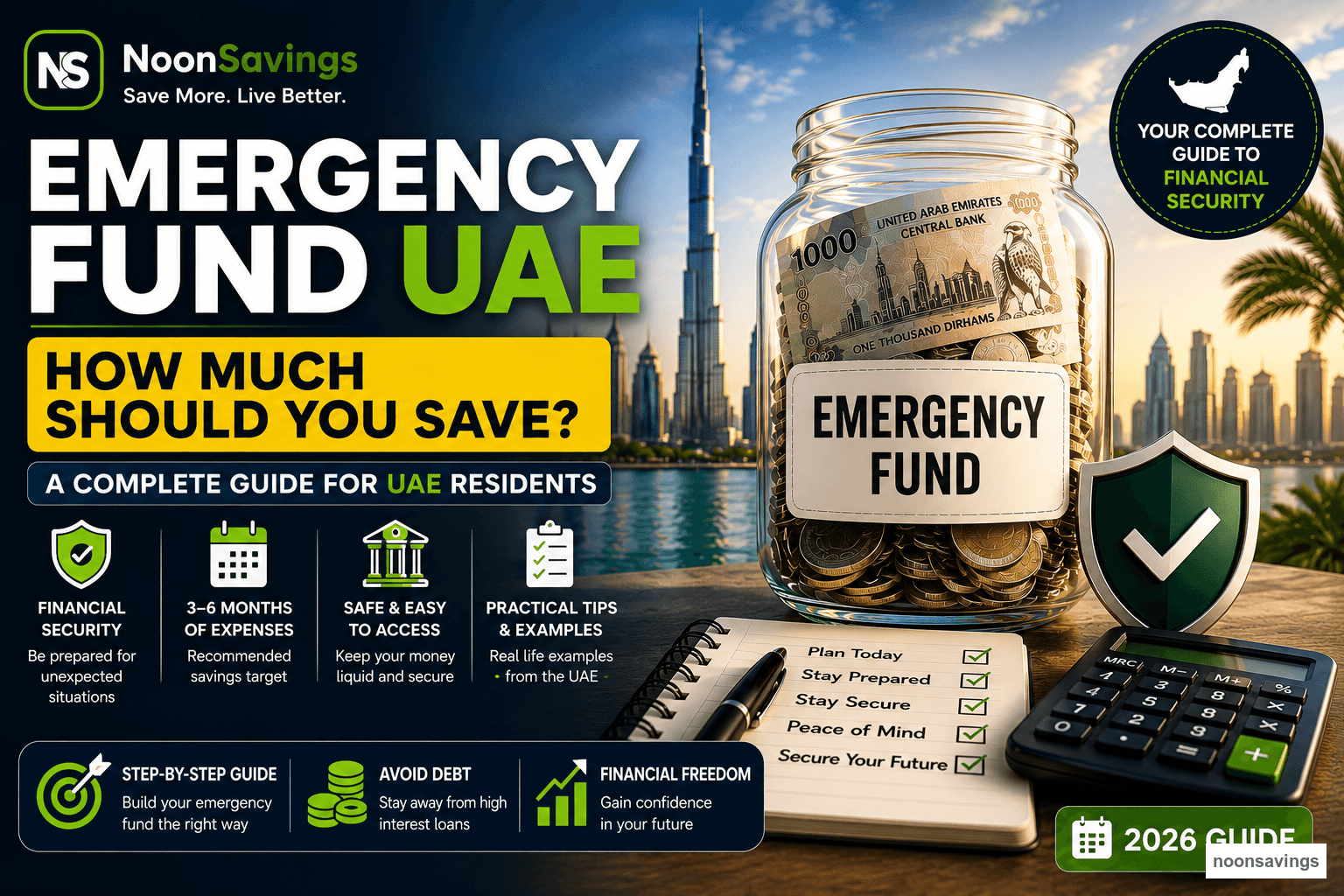
Learn how to build an emergency fund in the UAE, how much you should save, where to keep your money, and common mistakes to avoid. A complete {year} guide for UAE residents.
Read more: Emergency Fund UAE: How Much Should You Save? (2026 Guide)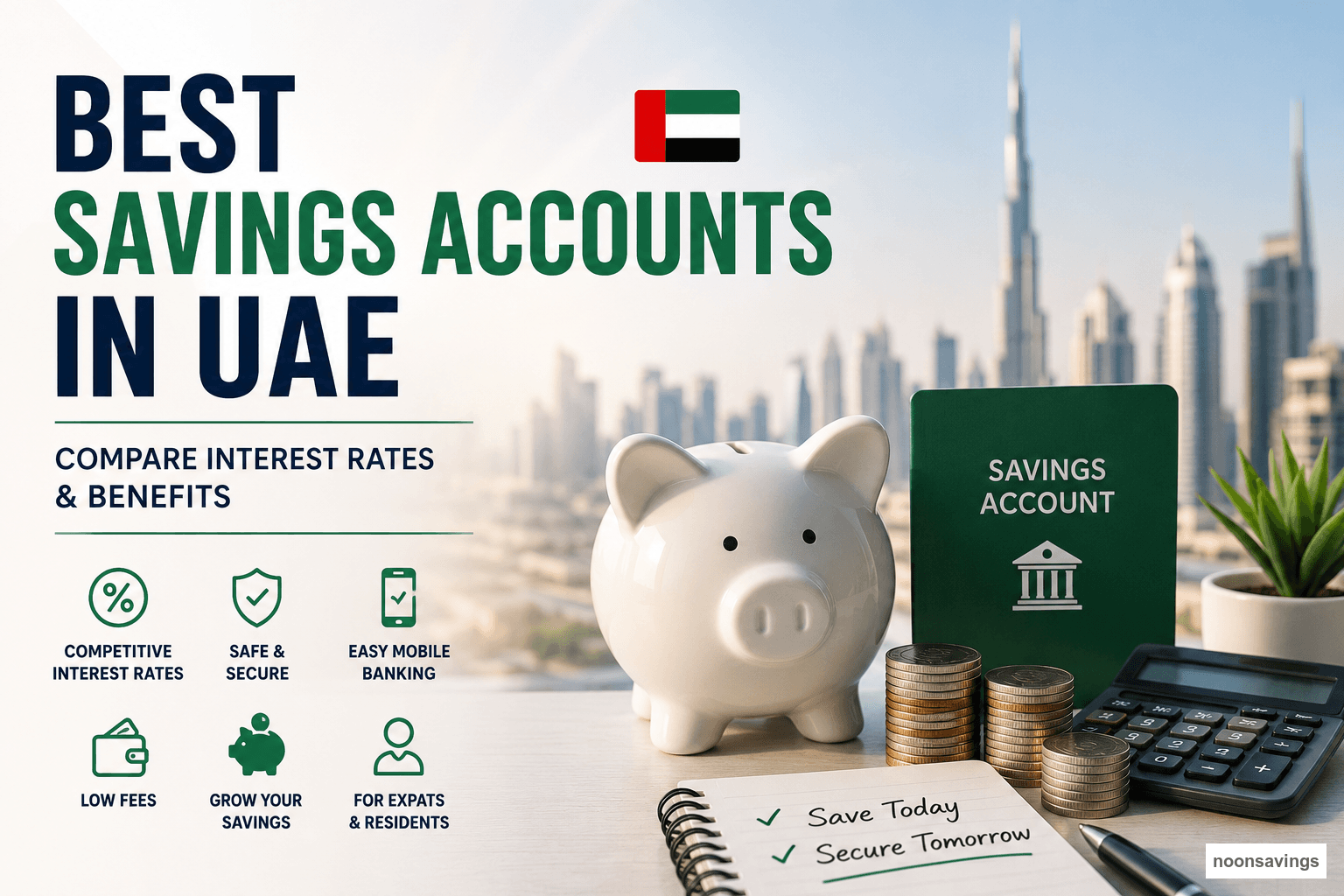
Compare the best savings accounts in UAE for high rates, flexible access, emergency funds and digital banking. See who each account suits before you open one.
Read more: Best Savings Accounts in UAE (2026): Which Account Fits Your Goals?
Compare the best banks in UAE for saving money, salary banking, digital access, Islamic options and low-fee account setup. See which bank fits your goals best.
Read more: Best Banks in UAE for Saving Money (2026): Which Bank Fits You Best?FAQ
An emergency fund is cash kept aside for essential expenses during income loss, medical issues, urgent travel, repairs or other unexpected events.
Many residents start with three to six months of essential expenses. Families, self-employed people and variable income earners may prefer nine to twelve months.
Yes. Rent or mortgage payments are usually one of the biggest essential costs and should be included in your monthly baseline.
Include school fees if they are a necessary family cost. You can add a monthly equivalent under family and childcare or other essentials.
Use accessible, low-risk accounts. Avoid tying up the entire fund in investments or deposits that can fall in value or delay withdrawals.
Emergency money should prioritize access and stability. You can invest long-term savings separately after your emergency fund is in place.
One month is a useful first milestone, but most households should continue building toward a larger buffer.
Review it after rent changes, job changes, new dependents, debt payoff or major changes to your monthly expenses.
No. Credit cards can be a backup payment method, but they are debt, not savings.
Start small and automate what you can. The calculator shows the shortfall so you can set realistic milestones instead of guessing.
