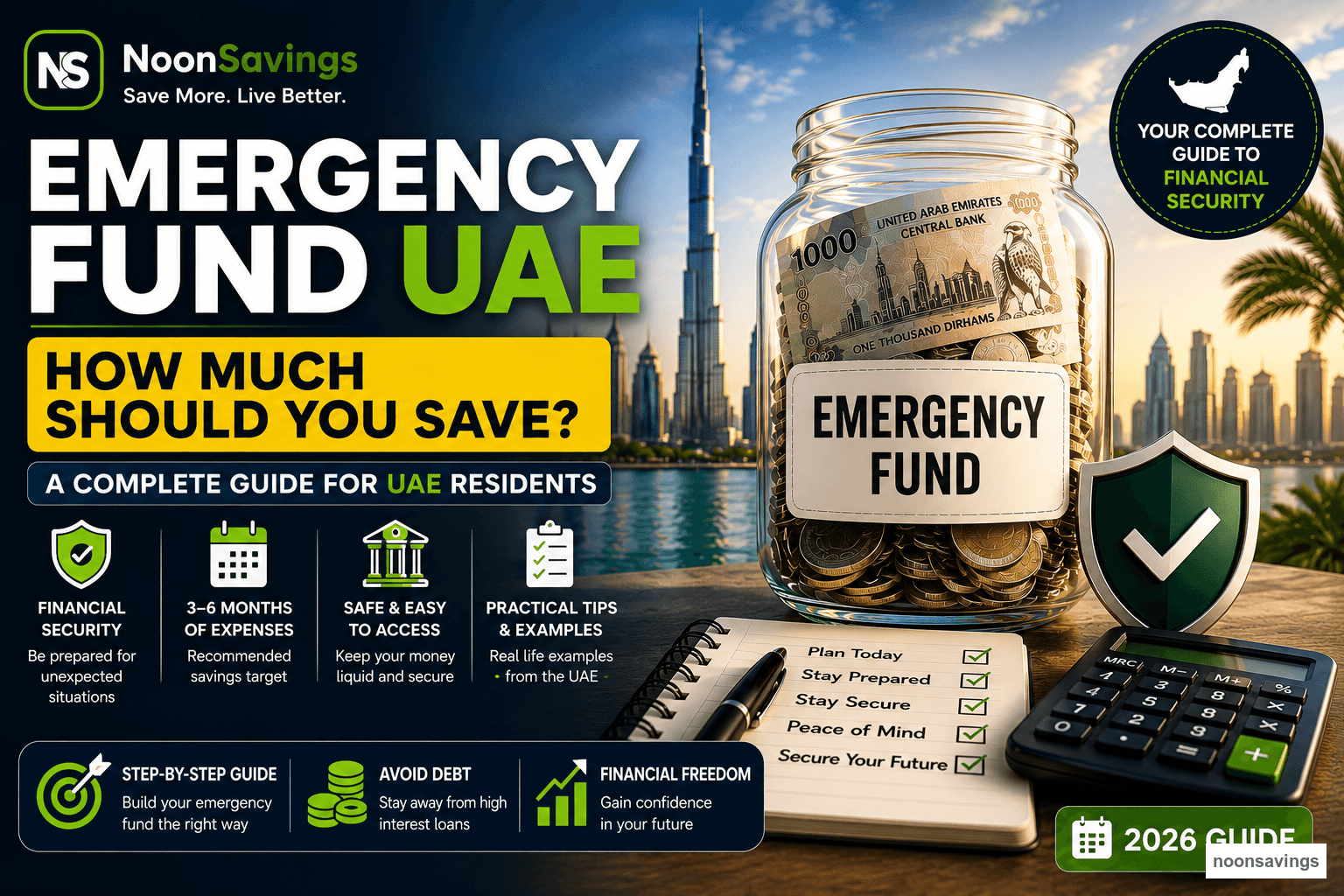
Emergency Fund UAE: How Much Should You Save? (2026 Guide)

Written byZaib Azhar✓
July 10, 202613 min read
Life is unpredictable.
A sudden job loss, an unexpected medical expense, a major car repair, or an urgent family emergency can put significant pressure on your finances—especially if you don't have money set aside for unexpected situations.
This is where an emergency fund becomes one of the most important financial tools you can build.
Many people focus on investing in gold, National Bonds, stocks, or real estate before building emergency savings. However, investing without an emergency fund can force you to sell your investments at the worst possible time.
Whether you're an employee, freelancer, business owner, or expatriate living in the UAE, having an emergency fund gives you financial confidence and peace of mind.
In this guide, you'll learn:
- What an emergency fund is
- Why every UAE resident should have one
- How much money you should save
- Where to keep your emergency savings
- Common mistakes to avoid
- How an emergency fund fits into your long-term financial plan
If you're still working on improving your savings habits, start by reading our guide on How to Save Money in Dubai before building your emergency fund.
Quick Answer
If you're looking for the short answer:
✅ Aim to save 3–6 months of essential living expenses in an emergency fund.
For example:
| Monthly Expenses | Recommended Emergency Fund |
|---|---|
| AED 5,000 | AED 15,000–30,000 |
| AED 8,000 | AED 24,000–48,000 |
| AED 12,000 | AED 36,000–72,000 |
| AED 20,000 | AED 60,000–120,000 |
If your income is irregular or you're self-employed, consider saving 6–12 months of expenses for greater financial security.
⭐ Build your emergency fund before making long-term investments.
At a Glance
| Question | Answer |
|---|---|
| What is an emergency fund? | Money saved specifically for unexpected expenses. |
| How much should you save? | Usually 3–6 months of essential expenses. |
| Where should you keep it? | A safe, easily accessible savings account or low-risk savings product. |
| Should you invest it? | Emergency savings should prioritize accessibility over high returns. |
| Who needs one? | Every UAE resident, including employees, freelancers, and business owners. |
Table of Contents
- What Is an Emergency Fund?
- Why Every UAE Resident Needs One
- How Much Emergency Savings Should You Have?
- Emergency Fund Calculator
- Where Should You Keep Your Emergency Fund?
- Emergency Fund vs Investing
- Real UAE Examples
- Common Mistakes
- Expert Recommendation
- Final Verdict
- FAQ
What Is an Emergency Fund?
An emergency fund is money set aside specifically for unexpected financial emergencies.
Unlike your monthly budget or investment portfolio, this money is not intended for vacations, shopping, or planned purchases.
Instead, it acts as a financial safety net that helps you handle life's unexpected challenges without relying on credit cards or loans.
Examples of genuine emergencies include:
- Losing your job
- Unexpected medical expenses
- Major car repairs
- Emergency travel
- Urgent home maintenance
- Family emergencies
An emergency fund helps you cover these costs while protecting your long-term financial goals.
What Is NOT an Emergency Fund?
Many people mistakenly treat every unexpected expense as an emergency.
However, planned or predictable expenses should be covered by your regular budget rather than your emergency savings.
Examples that don't normally qualify include:
- Buying a new smartphone
- Shopping during seasonal sales
- Upgrading your car
- Paying for holidays
- Home renovations
- Luxury purchases
Keeping your emergency fund separate from your everyday spending makes it easier to avoid using it for non-essential expenses.
Why Every UAE Resident Needs an Emergency Fund
Living in the UAE offers many opportunities, but it also comes with financial responsibilities.
Rent, school fees, healthcare, transportation, and daily living expenses can quickly add up.
Without emergency savings, even a short interruption to your income could create unnecessary financial stress.
An emergency fund provides several important benefits.
Financial Security
Knowing you have money available for unexpected situations helps reduce financial anxiety and allows you to make decisions without feeling pressured.
Protection from Debt
Without emergency savings, many people rely on credit cards or personal loans when unexpected expenses arise.
Having an emergency fund can help reduce the need for high-interest borrowing.
If you're currently using credit cards, our guide on Best Credit Cards in UAE explains how to choose one that matches your spending habits while avoiding unnecessary fees.
Greater Flexibility
An emergency fund gives you time to make better financial decisions.
For example, if you lose your job, you'll have more flexibility to search for the right opportunity rather than accepting the first offer out of financial necessity.
Protecting Your Investments
One of the biggest mistakes investors make is putting all of their money into investments before building emergency savings.
Imagine investing AED 50,000 in Gold or National Bonds and then facing an unexpected emergency a few months later.
You may be forced to sell your investments earlier than planned.
This is why financial planning generally starts with building an emergency fund before investing for long-term goals.
If you're deciding where to invest after building your emergency savings, read our comparison of Gold vs National Bonds UAE to understand which option may better suit your financial objectives.
Peace of Mind
Perhaps the biggest benefit of an emergency fund is confidence.
Knowing that you're financially prepared for unexpected situations allows you to focus on your career, family, and long-term financial goals instead of worrying about every unexpected expense.
How Much Emergency Savings Should You Have?
One of the most common questions people ask is:
"How much should I keep in my emergency fund?"
The answer depends on your monthly essential expenses, job stability, family responsibilities, and income source.
Rather than choosing a random amount, calculate how much money you would need if your income stopped tomorrow.
Your emergency fund should cover essential living expenses, not discretionary spending.
These typically include:
- Rent or mortgage
- Utility bills
- Groceries
- Transportation
- Healthcare
- Insurance
- School fees (if applicable)
- Minimum loan or credit card payments
Entertainment, luxury shopping, and vacations are generally not included when calculating your emergency fund target.
Emergency Fund Recommendations
The table below provides general guidance.
| Situation | Recommended Savings |
|---|---|
| Stable salaried employee | 3–6 months of expenses |
| Couple with children | 6 months of expenses |
| Freelancer | 6–12 months of expenses |
| Business owner | 6–12 months of expenses |
| Single professional | 3–6 months of expenses |
The less predictable your income is, the larger your emergency fund should be.
Emergency Fund Calculator
A simple way to estimate your emergency fund is:
Monthly Essential Expenses × Number of Months = Emergency Fund Target
Here are some examples.
| Monthly Expenses | 3 Months | 6 Months |
|---|---|---|
| AED 5,000 | AED 15,000 | AED 30,000 |
| AED 8,000 | AED 24,000 | AED 48,000 |
| AED 10,000 | AED 30,000 | AED 60,000 |
| AED 15,000 | AED 45,000 | AED 90,000 |
| AED 20,000 | AED 60,000 | AED 120,000 |
Don't feel discouraged if these numbers seem large.
Building an emergency fund is a gradual process—not something most people achieve overnight.
How to Build Your Emergency Fund Faster
Many people delay building an emergency fund because they believe they need a large amount of money to get started.
In reality, consistency matters far more than the amount you save initially.
Here are some practical ways to build your emergency savings faster.
Automate Your Savings
Set up an automatic monthly transfer to a dedicated savings account.
Treat your savings like any other monthly bill.
Pay yourself first before spending on non-essential items.
Save Windfalls
Whenever you receive extra income, consider saving a portion of it.
Examples include:
- Annual bonuses
- Salary increases
- Tax refunds (where applicable)
- Cashback rewards
- Freelance income
- Gift money
Even saving half of unexpected income can significantly accelerate your progress.
If you're looking for additional ways to reduce spending, explore our guide on Best Cashback Apps in UAE to earn rewards on everyday purchases.
Reduce Small Monthly Expenses
Building an emergency fund isn't only about earning more.
It's also about spending more intentionally.
Simple changes can make a noticeable difference over time:
- Cook at home more often.
- Review your subscriptions.
- Compare insurance annually.
- Shop during promotions.
- Plan grocery purchases.
Our Saving Tips and Tricks in UAE guide includes practical ideas to reduce everyday expenses without sacrificing your lifestyle.
Real-Life UAE Examples
Let's see how different people might approach emergency savings.
Example 1: Single Professional
Monthly salary:
AED 8,000
Essential monthly expenses:
AED 5,000
Recommended emergency fund:
AED 15,000–30,000
By saving AED 1,000 each month, this goal could be reached gradually while maintaining a balanced lifestyle.
Example 2: Married Couple
Combined monthly income:
AED 20,000
Essential monthly expenses:
AED 11,000
Recommended emergency fund:
AED 33,000–66,000
This provides greater financial security if one income is temporarily interrupted.
Example 3: Family with Children
Monthly household expenses:
AED 18,000
Recommended emergency fund:
AED 54,000–108,000
Families often face higher fixed costs, making a larger emergency fund particularly valuable.
Example 4: Freelancer
Monthly income:
Varies between AED 10,000 and AED 18,000
Recommended emergency fund:
At least 6–12 months of essential expenses.
Because freelance income can fluctuate, a larger emergency fund provides additional financial stability during slower periods.
Should You Build an Emergency Fund Before Investing?
For most people, the answer is yes.
Investing is an important part of long-term wealth building, but investments should not replace readily accessible emergency savings.
Without an emergency fund, you may be forced to sell investments during market downturns or withdraw money earlier than planned.
A sensible financial roadmap often looks like this:
- Create a monthly budget.
- Pay off high-interest debt where possible.
- Build an emergency fund.
- Start long-term investing.
- Continue increasing both savings and investments over time.
If you're considering your first investment after building emergency savings, our comparison of Gold vs National Bonds UAE can help you understand which option may better match your financial goals.
Where Should You Keep Your Emergency Fund?
An emergency fund should always be easy to access when you need it.
While it's natural to want the highest possible return, emergency savings are different from long-term investments.
Your priority should be:
- Safety
- Accessibility
- Stability
rather than maximizing returns.
Here are some common options available to UAE residents.
| Option | Suitable for Emergency Fund? | Why |
|---|---|---|
| Savings Account | ✅ Yes | Easy access and low risk. |
| National Bonds | ✅ Partially | Suitable for a portion of long-term emergency savings, depending on the product terms and your need for liquidity. |
| Current Account | ✅ Yes | Accessible, although it may earn little or no return. |
| Gold | ❌ Not Ideal | Prices fluctuate and selling may not always align with immediate cash needs. |
| Stocks & ETFs | ❌ No | Market values can decline when you need the money most. |
| Cryptocurrency | ❌ No | Highly volatile and unsuitable for emergency savings. |
The key principle is simple:
Your emergency fund should be available when you need it—not when the market is performing well.
Emergency Fund vs Investing
Many people believe they should invest every dirham they save.
In reality, an emergency fund and investments serve different purposes.
| Emergency Fund | Investments |
|---|---|
| Covers unexpected expenses | Builds long-term wealth |
| Easy to access | May fluctuate in value |
| Prioritizes safety | Prioritizes long-term growth |
| Used during emergencies | Used for future financial goals |
Think of it this way:
Your emergency fund protects your investments.
Without emergency savings, you may be forced to sell investments during difficult market conditions.
That is why financial planners generally recommend building emergency savings before investing aggressively.
Common Mistakes to Avoid
Building an emergency fund is straightforward, but many people make mistakes that reduce its effectiveness.
Waiting Until You Earn More
One of the biggest mistakes is believing you need a higher salary before you can start saving.
Even setting aside AED 200 or AED 500 each month creates momentum.
Starting today is usually better than waiting for the "perfect" time.
Keeping Too Much Cash at Home
While it's sensible to keep a small amount of emergency cash, storing your entire emergency fund at home exposes it to theft, loss, or damage.
Using a reputable financial institution generally provides greater security.
Investing Your Emergency Fund
Your emergency fund should not be treated as investment capital.
Money invested in volatile assets may lose value at exactly the time you need access to it.
Keep emergency savings separate from your long-term investment portfolio.
Using Your Emergency Fund for Non-Essential Purchases
A holiday, a new phone, or shopping during a sale may feel important, but they are not emergencies.
Protect your emergency fund for genuine financial needs.
Not Rebuilding Your Emergency Fund
If you need to use part of your emergency savings, make rebuilding it a priority once your financial situation stabilises.
An emergency fund is not a one-time goal—it should be maintained throughout your financial journey.
Expert Recommendation
For most UAE residents, the best financial strategy is surprisingly simple.
- Build a monthly budget.
- Create an emergency fund covering at least three to six months of essential expenses.
- Pay down high-interest debt where possible.
- Begin investing for long-term goals.
- Continue increasing both your emergency savings and investments over time.
If your income is irregular or you support a larger family, consider aiming for six to twelve months of essential expenses for additional financial security.
Remember:
An emergency fund is not designed to make you rich.
It is designed to prevent temporary financial challenges from becoming long-term financial problems.
Final Verdict
Every UAE resident should have an emergency fund.
Whether you're an employee, entrepreneur, freelancer, or business owner, unexpected expenses are a part of life.
Building emergency savings provides financial security, protects your long-term investments, and reduces the need to rely on debt during difficult times.
Start with a realistic goal.
Save consistently.
Increase your emergency fund over time.
Once you've built a solid financial safety net, you can confidently begin investing for your future.
Key Takeaways
✔ Build an emergency fund before focusing on long-term investments.
✔ Aim to save three to six months of essential living expenses.
✔ Freelancers and business owners should generally consider saving six to twelve months of expenses.
✔ Keep emergency savings in a safe and easily accessible place.
✔ Avoid investing emergency money in high-risk assets.
✔ Continue rebuilding your emergency fund whenever you need to use it.
Related Guides
Continue improving your financial future with these practical resources:
- How to Save Money in Dubai
- Gold vs National Bonds UAE
- National Bonds UAE Review
- How to Save Money Buying Gold in UAE
- Saving Tips and Tricks in UAE
- Best Credit Cards in UAE
- Best Cashback Apps in UAE
Frequently Asked Questions
Planning tool: Use our Emergency Fund Calculator to turn your essential monthly expenses into a realistic emergency-savings target.
What is an emergency fund?
An emergency fund is money set aside specifically to cover unexpected expenses such as job loss, medical emergencies, urgent home repairs, or essential car repairs. It should only be used for genuine financial emergencies.
How much emergency savings should I have in the UAE?
Most financial experts recommend saving three to six months of essential living expenses. If your income is irregular or you are self-employed, consider aiming for six to twelve months of expenses.
Where should I keep my emergency fund?
Your emergency fund should be kept somewhere safe and easily accessible, such as a savings account or another low-risk savings product that allows quick access to your money when needed.
Should I invest my emergency fund?
Generally, no. Emergency savings should prioritise stability and accessibility rather than high investment returns. Long-term investments should usually be funded separately.
Is National Bonds suitable for an emergency fund?
National Bonds may be suitable for part of your emergency savings depending on the product you choose and your liquidity needs. Always review the product terms before investing.
Is Gold a good emergency fund?
Gold is better suited for long-term wealth preservation than emergency savings. Because prices fluctuate, it may not be the most appropriate place to keep money you might need immediately.
What if I need to use my emergency fund?
Using your emergency fund for genuine emergencies is exactly what it is intended for. After the emergency has passed, make rebuilding your savings a priority.
Can I build an emergency fund while paying off debt?
Yes. Many people choose to build a small emergency fund first while continuing to pay down high-interest debt. This provides some financial protection against unexpected expenses without delaying debt repayment completely.
Disclaimer: This article is for educational purposes only and does not constitute financial or investment advice. Every individual's financial situation is different, so consider your personal circumstances and seek professional advice where appropriate before making financial decisions.

Written byZaib Azhar✓
Zaib Azhar is a UAE-based web developer, photographer, and savings enthusiast who has been living in the UAE for over 12 years. Passionate about smart budgeting, cashback strategies, affordable living, and digital solutions, he shares practical insights to help residents save money and make informed financial decisions. With experience in web development, online research, and content creation, Zaib combines technology, creativity, and real-life UAE market knowledge to create useful guides on budgeting, banking offers, consumer deals, and cost-of-living tips.
View all articles by Zaib Azhar →