Cost of Living in Dubai: A Comprehensive Guide

Written byZaib Azhar✓
July 23, 202612 min read
Dubai is widely recognised as a global hub for business, tourism, and luxury living. However, for those planning to relocate or looking to manage their finances better within the emirate, understanding the actual cost of living is essential. While the city offers an exceptional quality of life, expenses can accumulate quickly if not managed with care.
This guide provides an objective, detailed breakdown of the essential monthly expenses in Dubai. From housing and schooling to groceries and transport, we examine what it realistically costs to live in this vibrant city and how you can make informed decisions to protect your financial health.
What is the Cost of Living in Dubai?
The cost of living in Dubai refers to the total sum of essential and discretionary expenses required to maintain a specific standard of life in the emirate. Unlike many Western cities, Dubai does not levy personal income tax, which significantly increases take-home pay. However, indirect taxes, service charges, and the premium cost of high-quality services like private education and healthcare mean that budgeting remains a necessity.
Your actual cost of living will depend heavily on your household size, lifestyle choices, and the residential area you choose to settle in.
Why Understanding Your Expenses Matters
Failing to plan a realistic budget before moving to or within Dubai can lead to financial strain. Many expatriates are attracted by tax-free salaries but find themselves spending more than anticipated on housing, schooling, and leisure activities.
By understanding the breakdown of these costs, you can negotiate better employment packages, select the right neighbourhood for your family, and establish a sustainable savings plan. To explore broader strategies on managing your finances in the emirate, read our guide on How to Save Money in Dubai.
High-End vs Budget Lifestyle
Dubai accommodates a wide spectrum of lifestyles. A single professional living in a modest studio apartment and using public transport will experience a vastly different financial reality compared to a family renting a luxury villa in an upscale community and driving multiple premium vehicles.
Understanding where you fit on this spectrum helps you set realistic expectations and avoid lifestyle inflation, which is a common challenge for residents in the UAE.
How We Evaluated These Costs
We evaluated the costs presented in this guide using a rigorous methodology based on:
- Official market data from local authorities and regulatory bodies.
- Real-time rental indices and property market reports.
- Average pricing from leading supermarket chains and service providers.
- Practical feedback and expense tracking from long-term Dubai residents.
We have excluded temporary promotional offers, seasonal discounts, and short-term campaigns to ensure this data remains reliable and evergreen.
Quick Comparison of Major Monthly Expenses
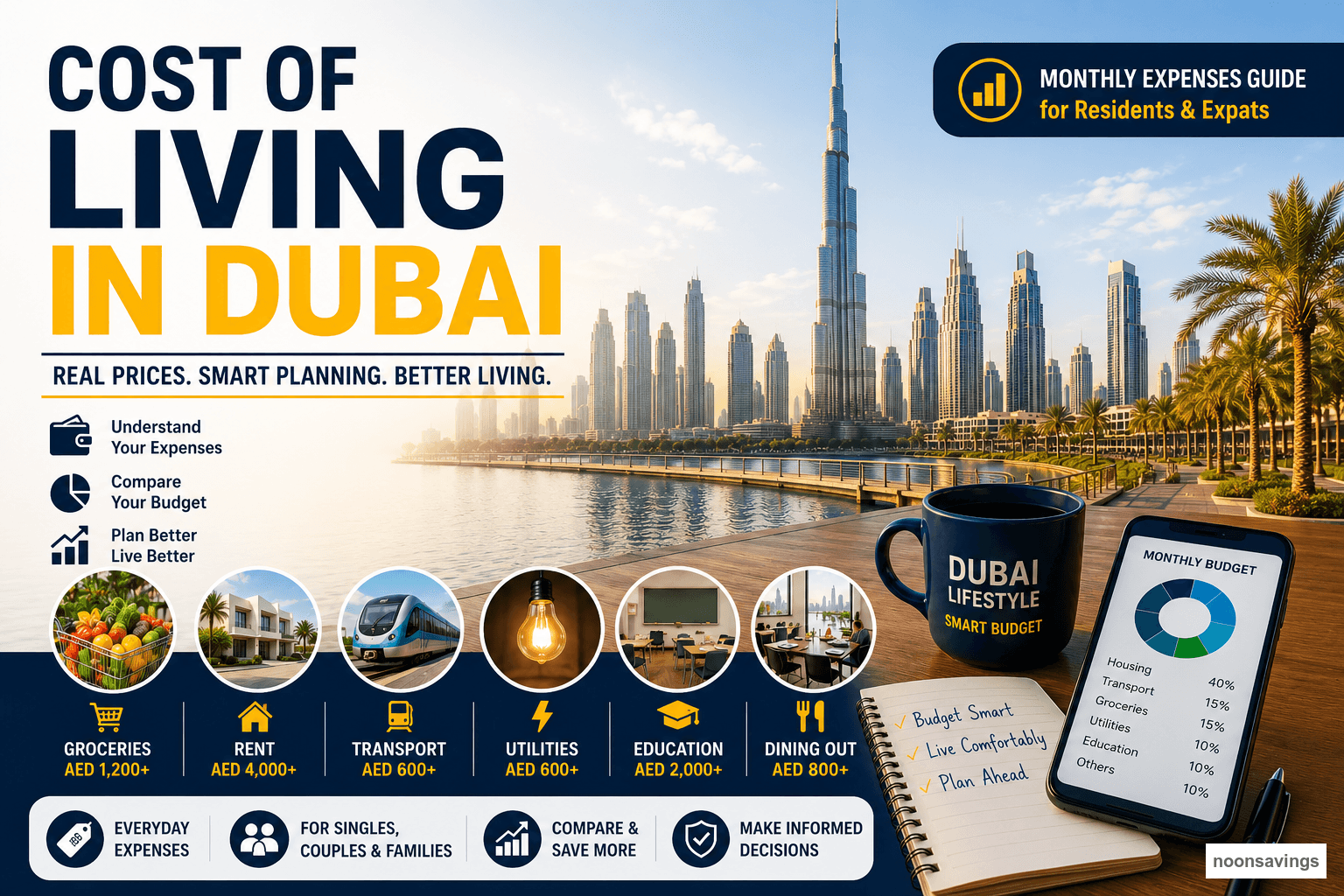
| Expense Category | Budget Range (AED) | Mid-Range (AED) | Premium Range (AED) |
|---|---|---|---|
| Housing (Monthly Equivalent) | 3,000 - 5,000 | 6,000 - 10,000 | 15,000+ |
| Groceries (Per Person) | 500 - 800 | 1,000 - 1,500 | 2,000+ |
| Utilities & Internet | 600 - 900 | 1,000 - 1,800 | 2,500+ |
| Transportation | 350 - 600 (Metro) | 1,200 - 2,500 (Mid-car) | 4,000+ (Premium car) |
| Schooling (Per Child) | 1,500 - 2,500 | 3,000 - 5,000 | 6,500+ |
Housing and Accommodation

Best For
Individuals and families seeking a secure, comfortable place to live that aligns with their daily commute and lifestyle preferences.
Overview
Housing is invariably the largest single expense for any resident in Dubai. The market offers everything from compact studio apartments in older districts to sprawling luxury villas in gated golf communities. Rent is traditionally paid using post-dated cheques, though monthly digital payment options are becoming more established. To understand how to negotiate and lower these costs, refer to our comprehensive guide on How to Save Money on Rent in Dubai.
Key Costs
- Studio Apartment (Suburbs): AED 35,000 - AED 50,000 annually.
- 1-Bedroom Apartment (Mid-town): AED 60,000 - AED 90,000 annually.
- 3-Bedroom Villa (Suburbs): AED 130,000 - AED 200,000 annually.
Pros
- High-quality building standards and modern amenities (pools, gyms, security).
- Wide variety of locations, from bustling beachside districts to quiet suburban communities.
- Well-regulated rental market protected by the Real Estate Regulatory Agency (RERA).
Cons
- High upfront costs, including security deposits, agency fees, and multiple rent cheques.
- Annual rent increases can be significant in highly sought-after areas.
- Additional community service fees may apply to certain properties.
Who Should Choose It?
Those who prioritise safety, modern infrastructure, and proximity to work or schools, and are willing to allocate 30% to 40% of their income to housing.
Who Should Avoid It?
Individuals who are not planning to stay in Dubai for at least a year, as breaking a tenancy contract early usually incurs heavy financial penalties.
Verdict
Housing is a non-negotiable cost, but you can significantly reduce your outlay by choosing emerging suburbs instead of prime central locations. For a detailed list of affordable residential areas, check out the Cheapest Areas to Live in Dubai for Families.
Private Schooling
Best For
Expatriate families who want their children to receive an internationally accredited education.
Overview
Public schools in Dubai are generally not open to non-GCC expatriate students, meaning private schooling is a necessity for most families. Dubai offers a vast range of international curricula, including British, American, Indian, and International Baccalaureate (IB). Tuition fees vary widely based on the school's reputation, facilities, and curriculum. For practical advice on managing these fees, read our guide on How to Reduce School Costs in Dubai Without Compromising Quality.
Key Costs
- Primary School (Average): AED 20,000 - AED 60,000 annually.
- Secondary School (Average): AED 35,000 - AED 90,000+ annually.
- Additional Costs: Uniforms, transport, books, and extracurricular activities can add 15% to 20% to the base tuition.
Pros
- World-class facilities, including advanced science labs, sports complexes, and arts centres.
- Highly qualified international teaching staff.
- Strong focus on multicultural integration and global university preparation.
Cons
- Extremely high cost, especially for premium IB or British curriculum schools.
- Sibling discounts are often minimal or non-existent.
- Competition for seats in top-rated schools can be intense.
Who Should Choose It?
Families with school-aged children who value global educational standards and have either a school allowance built into their employment contract or sufficient financial buffer.
Who Should Avoid It?
Young professionals, couples without children, or families whose employers do not offer educational assistance and whose household income cannot comfortably support private tuition fees.
Verdict
Education is a major financial commitment in Dubai. It is vital to research school ratings by the Knowledge and Human Development Authority (KHDA) to ensure you are getting the best value for your investment.
Private Transportation
Best For
Residents who require flexibility, comfort, and direct access to areas of the city not fully serviced by public transport.
Overview
While Dubai has an excellent public transport network, including the Dubai Metro and public buses, many residents prefer the convenience of owning or leasing a car. Fuel costs are relatively low compared to global standards, but other expenses such as insurance, registration, parking, and Salik (toll gates) must be factored into your monthly budget. To keep your vehicle running cost-effectively, you can also learn How to Save Money on Tyres in Dubai.
Key Costs
- Car Leasing (Economy Sedan): AED 1,500 - AED 2,500 monthly.
- Fuel (Average Monthly Use): AED 400 - AED 800.
- Salik & Parking: AED 200 - AED 500 monthly.
Pros
- Complete freedom of movement and protection from the intense summer heat.
- Well-maintained highway infrastructure makes driving efficient.
- Affordable fuel and vehicle maintenance costs compared to Europe or North America.
Cons
- High depreciation rates on new vehicles.
- Peak-hour traffic congestion can lead to long commute times.
- Annual registration and insurance costs are mandatory. To find the best rates, read our guide on Best & Cheap Car Insurance in Dubai.
Who Should Choose It?
Those who live or work in areas far from metro stations, families with young children, and individuals who travel frequently between different emirates.
Who Should Avoid It?
Single professionals living and working along the main metro line, as public transport is far more economical and stress-free.
Verdict
Owning a car offers unmatched convenience, but leasing or buying a reliable pre-owned vehicle is often the smartest financial move for new residents.
Grocery and Dining

Best For
All residents looking to maintain a healthy diet while balancing home-cooked meals with Dubai's diverse culinary scene.
Overview
Food costs in Dubai can vary dramatically depending on where you shop and how often you dine out. Imported goods from Europe or North America carry a premium, while locally sourced produce and regional brands are highly affordable. By shopping at the right locations, you can keep your food bill manageable. For a detailed comparison of local retailers, see our guide on Best Budget Supermarkets in Dubai Compared.
Key Costs
- Basic Groceries (Single Person): AED 600 - AED 1,200 monthly.
- Casual Dining Out (Per Meal): AED 50 - AED 120.
- Fine Dining (Per Person): AED 350 - AED 800+.
Pros
- Incredible variety of international cuisines and dining concepts.
- High standards of food safety and hygiene across all establishments.
- Growing availability of locally grown organic vegetables and sustainable produce.
Cons
- Imported specialty foods can be exceptionally expensive.
- Dining out frequently in premium districts can easily double your monthly food budget.
- Delivery fees and service charges add up quickly when using food delivery applications.
Who Should Choose It?
Anyone who enjoys culinary diversity and is willing to adopt smart shopping habits, such as buying local brands and planning meals. For more tips, read How to Save Money on Groceries in Dubai.
Who Should Avoid It?
Those who expect Western import brands to cost the same as they do in their home countries, as this expectation will quickly break any budget.
Verdict
With a little planning, food costs in Dubai can be kept remarkably low. Prioritising local supermarkets and cooking at home is the key to maintaining a balanced budget.
Which One Is Best? Lifestyle Comparison
Choosing the right lifestyle approach depends entirely on your financial goals and household income. Below is a comparison of how different choices impact your monthly savings potential.
| Lifestyle Profile | Ideal Household Income (AED) | Housing Choice | Primary Transport | Savings Potential |
|---|---|---|---|---|
| The Economical Saver | 10,000 - 15,000 | Studio in suburban areas | Dubai Metro & Buses | High |
| The Balanced Professional | 25,000 - 40,000 | 1-2 Bed Apartment in mid-town | Leased Mid-range Car | Moderate |
| The Premium Family | 60,000+ | Villa in gated community | Two Premium Vehicles | Variable |
Detailed Comparison Matrix
To help you visualise where your money goes, this matrix compares the flexibility and long-term financial impact of the major expense categories.
| Expense Category | Financial Flexibility | Upfront Cost | Potential to Optimise | Recommended Action |
|---|---|---|---|---|
| Housing | Low (Annual Contract) | High (Deposits & Cheques) | High (Move to cheaper area) | Limit rent to 30% of income |
| Schooling | Low (Academic Year) | Moderate (Registration fees) | Moderate (Apply for discounts) | Research mid-tier schools |
| Transport | High (If leasing or using Metro) | Low to High | High (Use public transport) | Avoid buying brand new cars |
| Groceries | High (Weekly adjustments) | Low | High (Shop at budget stores) | Buy local and regional brands |
Key Things to Consider Before Moving
Before making the decision to relocate to Dubai, or before signing a new lease, keep these critical factors in mind:
- Upfront Relocation Costs: Moving to Dubai requires significant initial capital. You will need to cover rental deposits, agency fees, utility connections, and basic home setup. If you need to furnish your new home affordably, read our guide on Where to Find Cheap Used Furniture in Dubai.
- Healthcare and Insurance: While employers are legally required to provide health insurance in Dubai, the level of coverage varies. Ensure you understand what is covered, especially for dependents.
- Utility Bills (DEWA): The Dubai Electricity and Water Authority (DEWA) bills include a housing fee which is 5% of your annual rent, divided into 12 monthly payments. This can significantly increase your monthly utility costs.
- Hidden Fees: Small charges like knowledge fees, innovation fees, and service charges on transactions can add up over time. For a broader look at managing these hidden costs, explore our 20 Smart Money-Saving Tips & Tricks for UAE Residents.
Frequently Asked Questions
Is Dubai expensive to live in?
Dubai can be expensive, but it is entirely possible to live affordably. Your expenses are largely determined by your choices in housing, dining, and entertainment. By choosing suburban residential areas and shopping at budget-friendly supermarkets, you can maintain a highly economical lifestyle.
What is a good salary to live comfortably in Dubai?
For a single professional, a monthly salary of AED 12,000 to AED 18,000 allows for a comfortable lifestyle with room for savings. For a family of four with school-aged children, a household income of AED 30,000 to AED 45,000 is recommended to cover private schooling, housing, and transport.
How much does the average utility bill cost in Dubai?
For a standard two-bedroom apartment, the average monthly DEWA bill (electricity and water) ranges from AED 600 to AED 1,000. This cost can rise during the summer months due to increased air conditioning usage.
Can I live in Dubai without a car?
Yes, Dubai has an efficient and clean public transport system. The Dubai Metro connects major residential, commercial, and tourist hubs. Living near a metro station makes commuting without a car highly practical and cost-effective.
Are public schools free for expats in Dubai?
No, public schools in Dubai are generally reserved for UAE nationals. Expatriates must enrol their children in private schools and pay annual tuition fees, which vary depending on the curriculum and school rating.
How much should I budget for monthly groceries?
An average budget of AED 800 to AED 1,200 per person per month is sufficient for a balanced diet that includes a mix of local and imported ingredients. Shopping at local co-ops and discount supermarkets can reduce this figure further.
What are the upfront costs of renting an apartment?
When renting an apartment, you should expect to pay a 5% to 10% security deposit, a 5% real estate agency fee, and utility connection deposits (DEWA and chiller). You will also need to provide post-dated cheques for the annual rent.
Is healthcare free in Dubai?
Healthcare is not free for expatriates. However, health insurance is mandatory, and employers must provide basic coverage. Many residents choose to upgrade their insurance plans to access premium private clinics and hospitals.
Planning tool: Use our Emergency Fund Calculator to turn your essential monthly expenses into a realistic emergency-savings target.
Final Thoughts
Managing the cost of living in Dubai does not mean compromising on your quality of life. By understanding where your money goes and making deliberate, informed choices regarding housing, transport, and daily expenses, you can enjoy everything this dynamic city has to offer while securing your financial future.
Take the time to plan your budget, avoid unnecessary lifestyle inflation, and focus on long-term financial stability. For more practical advice on saving and budgeting in the UAE, explore our Banking category for more comparisons.

Written byZaib Azhar✓
Zaib Azhar is a UAE-based web developer, photographer, and savings enthusiast who has been living in the UAE for over 12 years. Passionate about smart budgeting, cashback strategies, affordable living, and digital solutions, he shares practical insights to help residents save money and make informed financial decisions. With experience in web development, online research, and content creation, Zaib combines technology, creativity, and real-life UAE market knowledge to create useful guides on budgeting, banking offers, consumer deals, and cost-of-living tips.
View all articles by Zaib Azhar →