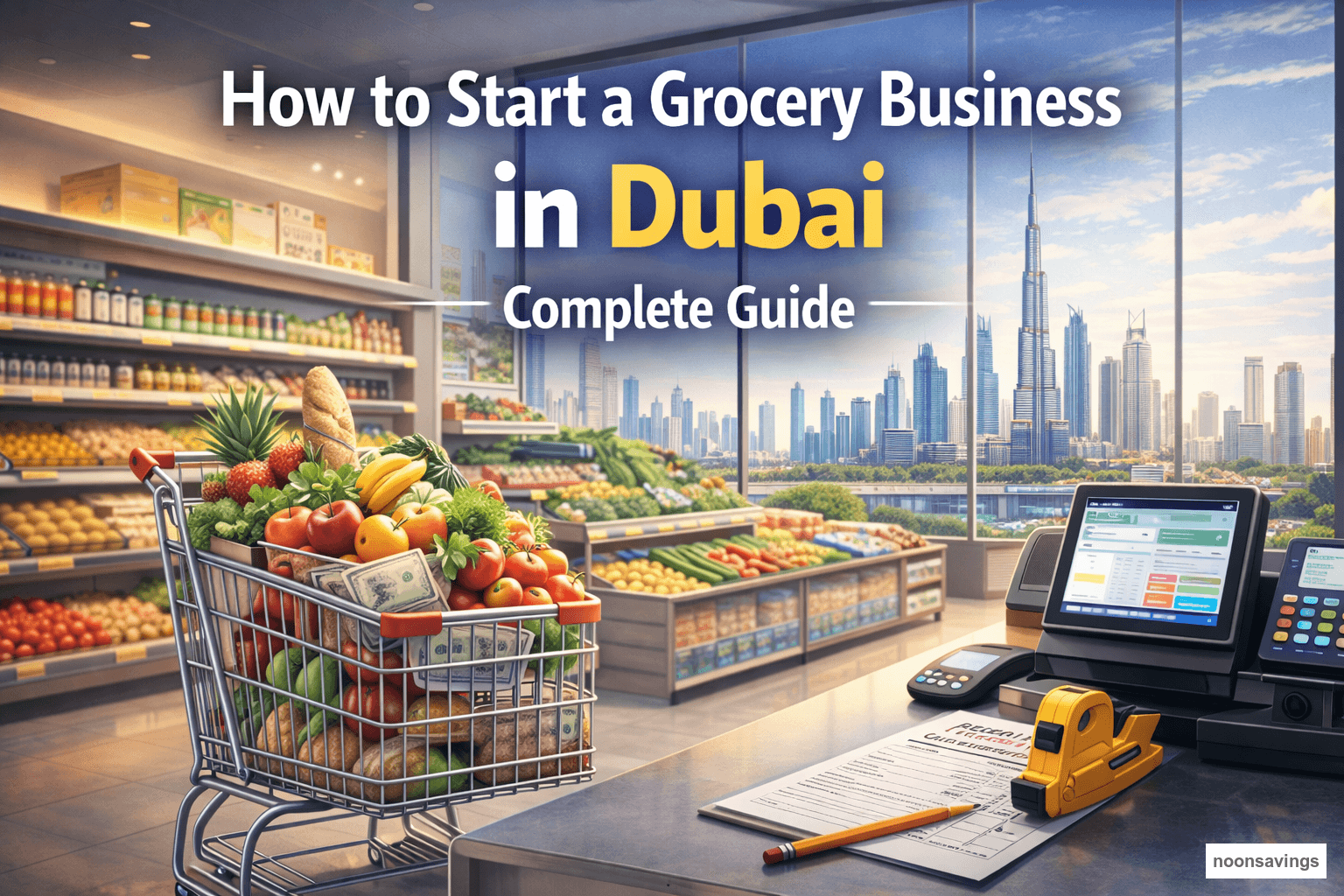
How to Start a Grocery Business in Dubai – Complete Guide

Written byZaib Azhar✓
March 6, 2026
Starting a grocery business in Dubai can be highly profitable due to the city’s growing population, high expatriate community, and steady demand for food and daily essentials. However, success requires careful planning, a clear understanding of the market, legal compliance, and effective marketing strategies. This guide covers everything you need to know to launch your grocery business in Dubai.
1. Understand the Grocery Market in Dubai
The UAE grocery market is a dynamic sector, offering opportunities for:
- Supermarkets and hypermarkets
- Local grocery stores
- Specialty food stores (organic, international foods)
Dubai is home to a diverse population with varied tastes and demands, making it a lucrative market for both traditional and modern grocery stores.
Key Trends:
- High demand for organic and healthy products
- Growing online grocery shopping trend
- Popularity of home delivery services
Understanding market trends allows you to tailor your product offerings and pricing.
2. Conduct Market Research
Before investing, research your target audience:
- Identify the demographics (expats, families, local residents)
- Determine popular products in the area
- Analyze competitors: both small stores and large supermarket chains
Tools for Research:
- Google Trends
- Local business directories
- Customer surveys and focus groups
Market research helps in selecting your store location, pricing, and product mix.
3. Decide on the Type of Grocery Store
There are several options:
- Mini grocery store / neighborhood shop
- Serves local residents
- Focuses on essentials
- Supermarket / hypermarket
- Larger inventory, includes fresh produce, snacks, and household items
- Specialty store
- Organic, imported products, gourmet items
Your choice will determine start-up costs, staffing, and licensing requirements.
4. Choose a Strategic Location
Location is critical for grocery business success:
- High foot traffic areas
- Residential neighborhoods
- Near schools, offices, and public transport
Avoid saturated markets unless you offer something unique, like specialty products or online delivery.
5. Legal Requirements and Licensing
To start a grocery business in Dubai, you must comply with UAE business regulations.
Steps:
-
Choose Business Structure:
- Sole proprietorship
- Limited liability company (LLC)
- Free zone business (if you plan online or specialty retail)
-
Obtain Trade License:
- Required by Department of Economic Development (DED)
- License categories: retail, commercial, or trading
-
Register Your Store Name
- Name must comply with UAE rules (no offensive words)
-
Apply for Municipality Approval
- Dubai Municipality ensures store hygiene, food safety, and layout compliance
-
Get Health & Safety Approvals
- Food handlers’ permits
- Safety inspections
Pro Tips:
- Hire a business consultant to navigate legal processes quickly
- Free zones offer 100% ownership for foreign investors
6. Estimate Start-Up Costs
Starting a grocery store requires budget planning. Costs include:
- Store rent or purchase
- Renovation and interior setup
- Licensing and permits
- Equipment (shelves, refrigerators, freezers, POS systems)
- Initial inventory
- Marketing and branding
Approximate Costs:
| Item | Cost (AED) |
|---|---|
| License & permits | 10,000 – 25,000 |
| Store rent | 50,000 – 150,000/year |
| Renovation & setup | 40,000 – 100,000 |
| Inventory | 50,000 – 150,000 |
| Marketing | 10,000 – 25,000 |
Tip: Keep extra cash for at least 6 months of operational expenses.
7. Source Your Products
Reliable suppliers ensure stock consistency and quality. Consider:
- Local suppliers for fresh produce
- Wholesale markets (Dragon Mart, Al Aweer)
- Imported goods from distributors
- Direct manufacturer deals for bulk purchase
Negotiate best prices, delivery frequency, and return policies.
8. Hire the Right Staff
A grocery store needs trained staff:
- Store manager
- Cashiers
- Shelf stockers
- Customer service staff
- Cleaners
Focus on staff with experience in retail or grocery operations to ensure smooth workflow.
9. Set Up Your Technology
Investing in technology improves efficiency:
- Point of Sale (POS) system – inventory management & sales tracking
- Accounting software – for bookkeeping & VAT compliance
- E-commerce platform – optional, if offering online delivery
A modern POS system allows better decision-making and reduces human error.
10. Marketing & Promotion
Promoting your grocery store is crucial to attract and retain customers:
Offline Marketing:
- Flyers, banners, and posters
- Local community engagement
- Loyalty cards and membership programs
Online Marketing:
- Social media (Instagram, Facebook, TikTok)
- Google My Business listing
- Email marketing and SMS alerts
- Online promotions & discounts
Tip: Partner with food delivery apps to reach a wider audience.
11. Pricing Strategy
Pricing can make or break your grocery business:
- Competitive pricing vs premium pricing
- Offer bundle deals or discounts
- Loyalty programs to retain customers
Tip: Track competitors regularly to adjust prices dynamically.
12. Store Layout and Display
A well-organized store enhances customer experience:
- Group products by category
- Use attractive displays for promotions
- Keep aisles spacious and clean
- Ensure signage is clear and readable
Tip: Place high-demand items at eye level to boost sales.
13. Inventory Management
Efficient inventory reduces wastage and losses:
- Track stock levels daily
- Use software for automatic alerts
- Rotate perishable items using FIFO (First-In, First-Out)
- Keep buffer stock for popular products
14. Customer Experience
Satisfied customers are your best marketing tool:
- Train staff for friendly service
- Offer home delivery for convenience
- Implement a feedback system
Loyal customers will provide word-of-mouth referrals, which is crucial for neighborhood stores.
15. Compliance and Safety
Dubai enforces strict food safety regulations:
- Store must pass health inspections
- Staff must have food handling permits
- Cleanliness standards must be maintained daily
Tip: Non-compliance can lead to fines or license cancellation.
16. Expand Your Business
Once your grocery store is established, consider growth:
- Open a second branch in another area
- Launch online grocery delivery
- Add specialty sections like organic or imported goods
Growth strategies increase profitability and brand presence in Dubai.
17. Common Challenges and How to Overcome
- High competition: Offer unique products or online delivery
- Inventory wastage: Monitor stock & perishable items carefully
- Regulatory compliance: Hire professional consultants for smooth licensing
- Staff turnover: Provide competitive pay and training
18. Key Takeaways
- Conduct thorough market research
- Choose the right location and type of store
- Obtain proper licenses and permits
- Focus on product sourcing, staffing, and marketing
- Keep customer experience and compliance as priorities
Starting a grocery business in Dubai can be profitable with the right planning, execution, and continuous improvement.
Frequently Asked Questions (FAQ)
Q: Can foreigners start a grocery store in Dubai?
Yes, through free zone ownership or local sponsorship.
Q: How much investment is needed to start a small grocery store in Dubai?
Approximately AED 150,000 – AED 400,000 depending on location, size, and inventory.
Q: Is it better to start small or open a large supermarket?
Starting small reduces risk and allows learning the market before scaling.
Conclusion
Launching a grocery business in Dubai requires careful planning, proper licensing, market research, and consistent customer service. By focusing on location, inventory, technology, marketing, and compliance, your grocery store can thrive in Dubai’s competitive retail sector. Success comes from strategic decisions, customer satisfaction, and continuous adaptation to market trends.
Written by Zaib Azhar✓
Zaib Azhar is a UAE-based web developer, photographer, and savings enthusiast who has been living in the UAE for over 12 years. Passionate about smart budgeting, cashback strategies, affordable living, and digital solutions, he shares practical insights to help residents save money and make informed financial decisions. With experience in web development, online research, and content creation, Zaib combines technology, creativity, and real-life UAE market knowledge to create useful guides on budgeting, banking offers, consumer deals, and cost-of-living tips.